Load Cell vs. Hall-Effect Pedals: Which Actually Makes You Faster?
Ask any coach where a beginner should spend first, and most will say pedals — not the wheel. The reason is braking consistency, and that comes down to how the brake pedal senses your input.
How each type senses input
Hall-effect and potentiometer pedals measure position — how far you've pushed the pedal. Load-cell pedals measure pressure — how hard you're pushing, in kilograms of force.
Real brakes work on pressure, not travel. That's why a load cell feels more like a real car and, crucially, is far more repeatable lap after lap.
Why pressure wins for braking
Because your leg is better at repeating a force than a distance, load-cell brakes let you hit the exact same brake point and pressure every lap. That consistency is where lap time comes from.
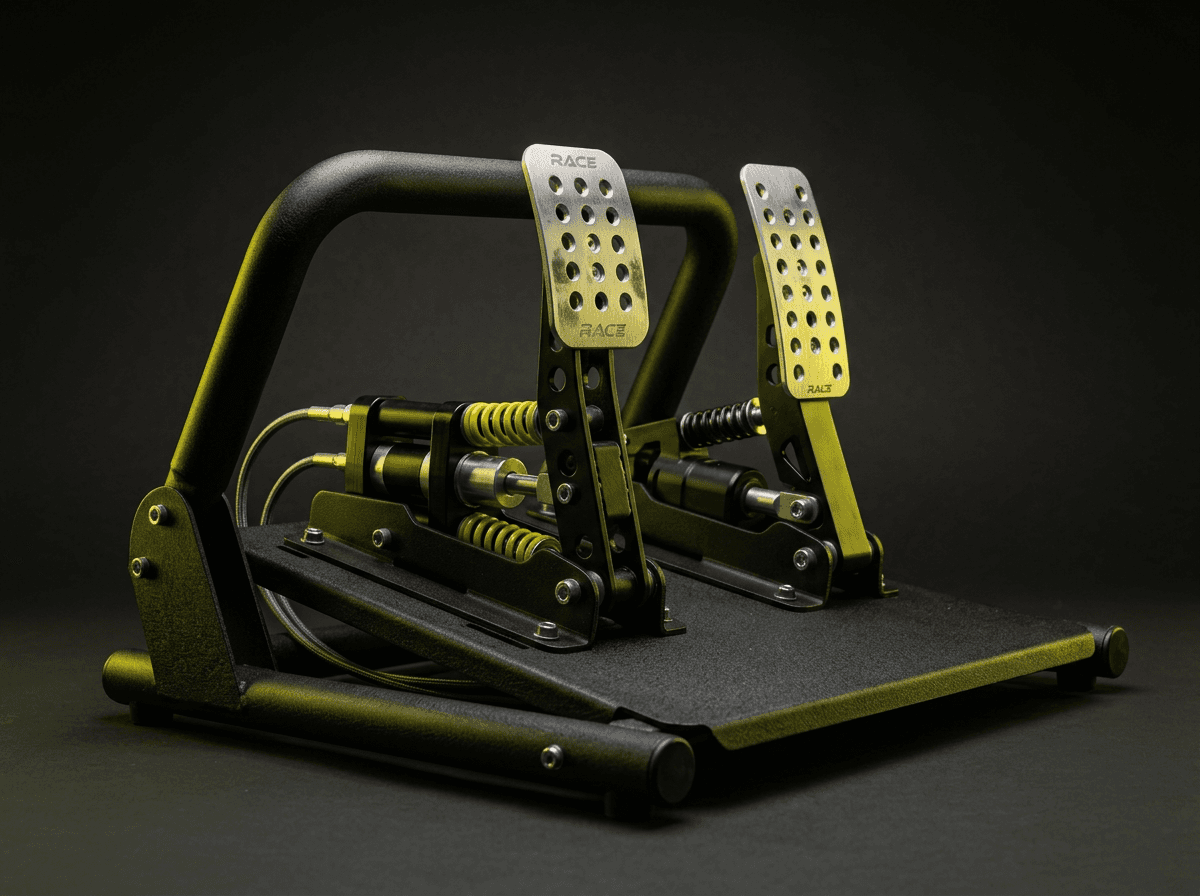
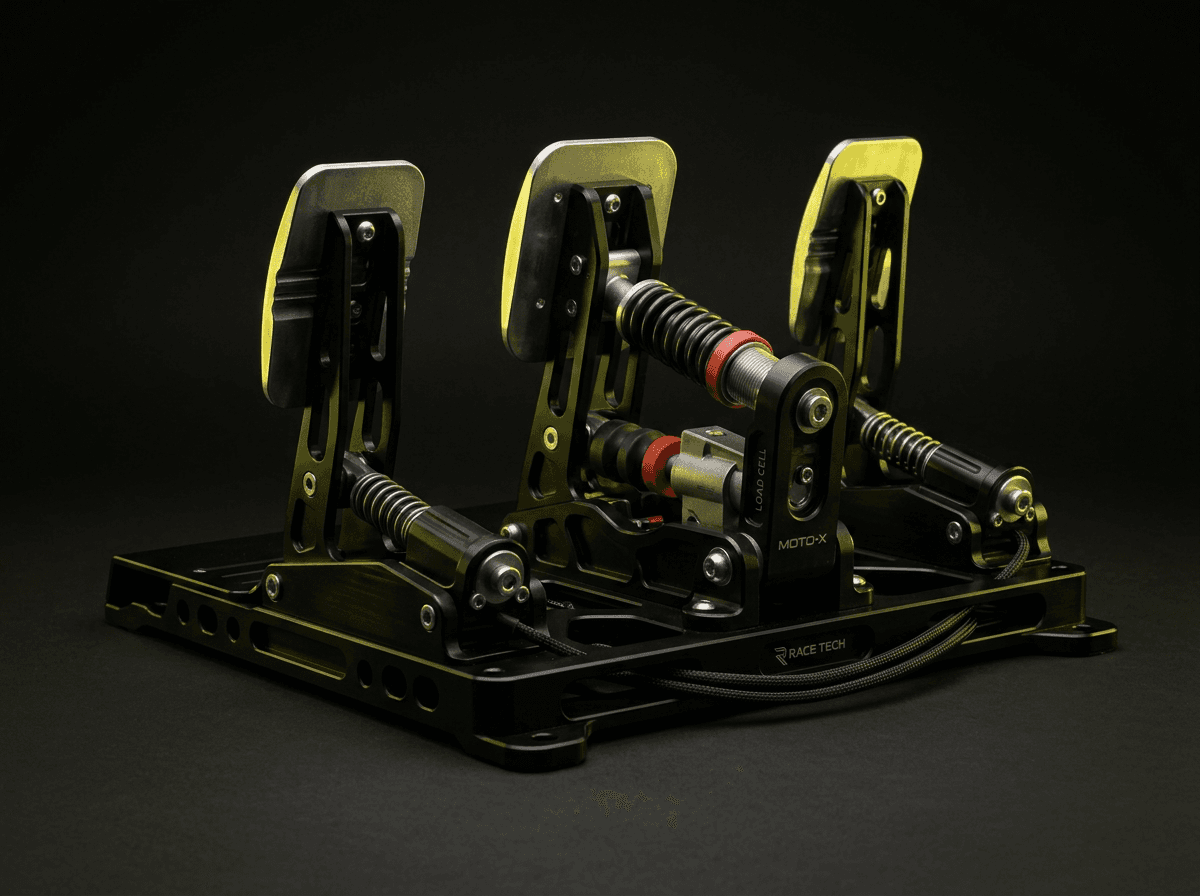
The SKION SP-2 starts at a 75 kg load cell; the CP Pro goes to 200 kg for competition-level modulation with swappable elastomers to tune the feel.
When hall-effect is still fine
For throttle and clutch, position sensing (hall-effect) is perfectly good — you don't brake with those. Good pedal sets like the SKION SP-3 combine a load-cell brake with hall-effect throttle and clutch for the best of both.
Frequently asked
Are load cell pedals worth it?+
For the brake, absolutely. Pressure-based braking is the most consistent way to hit your brake points, and consistency is what lowers lap times.
What load cell rating do I need?+
75–100 kg suits most players. Choose 180–200 kg only if you want maximum modulation and a very firm, race-car-like brake.
Recommended products
Ready to build your setup?
Shop the full lineup or grab a pre-matched bundle and skip the guesswork.